
White Papers
Make an impact by learning more about honey bees and pollinators through our scientifically researched white papers.


ESG is evolving. Has your strategy?
Download our guide to enhancing ESG impact with on-site beehives.
Over half of global GDP depends on nature, yet biodiversity remains one of the least measured ESG risks. As frameworks like TNFD gain traction, property and workplace leaders are being asked to measure something complex, localized, and ever-changing.
Best Bees offers a science-driven solution: managed beehives that generate real biodiversity data. To help teams understand how this data can be applied in practice, we created a practical guide outlining six ways beehives can support biodiversity measurement, ESG reporting, and engagement goals.
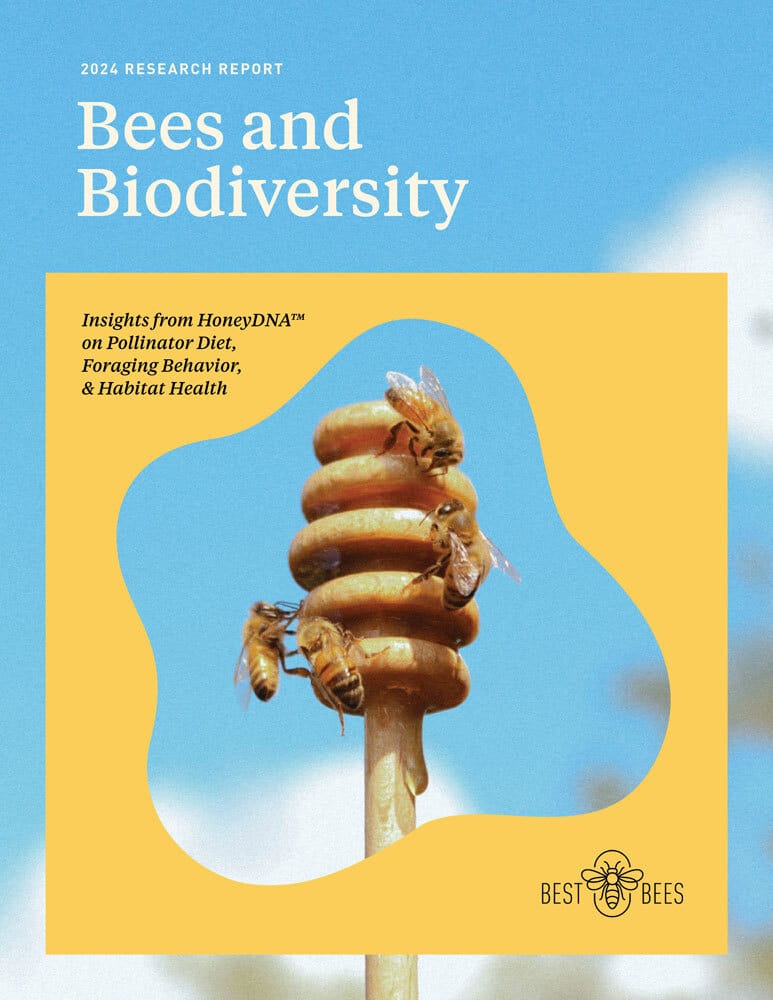
Bees and Biodiversity: Insights from HoneyDNA™ on Pollinator Diet, Foraging Behavior, and Habitat Health
Data from HoneyDNA™ can be leveraged to inform landscaping and planting strategies, helping individuals, property managers, and corporations protect and improve the health of their local environment — and thus, improve pollinator health.
With nearly a decade’s worth of data from client beehives at our fingertips, our team of in-house experts embarked on a multi-year study to understand just how powerful HoneyDNA™ could be as a biomonitoring tool — the findings might surprise you.

Protecting Business Interests by Protecting the Planet
A Guide to the Taskforce on Nature-Related Financial Disclosures
The TNFD is the first sustainability reporting framework specifically designed for biodiversity and nature-related issues. Learn why and how this framework is changing the face of sustainability reporting, and how honey bee hives can provide crucial biodiversity metrics.
Nature's reset: The effect of native and invasive plant forage on honey bee nutrition and survival
A peer-reviewed research study, co-authored by Kaitlyn Culbert and Noah Wilson-Rich. Published May 2024 in the Journal of Emerging Investigators.
Our study represents the first investigation of the significance of native and invasive plant forage to overwintering survival for honey bees as well as novel research examining the effect of natural catastrophic events on honey bee foraging. The availability of native and invasive plants plays a critical role in bee health, performance, and fitness, particularly in post-catastrophic event landscapes.


State of the Honey Bee Report
The answer is in the data. Check out our report on what scientists and beekeepers are doing to understand the health of honeybees, and by extension bees and pollinators at large.
Bees for ESG Impact
Bring data-yielding beehives to your commercial property to:
Learn how joining a scientifically managed pollinator program makes a global impact.

Jamestown Case Study
Learn how our client, Jamestown Properties, are leveraging their Best Bees beehives into an amazing sustainability and tenant engagement program.
A Guide to LEED Credits for Your Pollinator Habitat
With the rise in demand for resource efficiency, proper indoor air
quality, lower energy bills, green buildings are the new standard for
the construction industry. Leadership in Energy and Environmental
Design (LEED) is a third-party certification program for green
buildings developed by the U.S. Green Building Council (USGBC).


The Best Bees Company Capabilities Brief
Information included in the PDF: