
Managed Beehives for Your Property in the Washington, D.C. Area
Since 2010, The Best Bees Company has offered a unique, turnkey way for individuals and organizations to make a positive impact on the environment. The Best Bees Company is the leading beekeeping service in the greater Washington, D.C. area.

Our Mission
To expand the bee population while improving the health of honey bees and other pollinators here in Washington, D.C. and across the world. Our locally certified beekeepers install and manage hives on your property and use the data we collect to drive the science of pollinator health forward with scientific partners that include Urban Bee Lab, NASA, MIT and National Geographic.

Beekeeping for Your Residential Backyard
If you'd like to save bees, build a healthier environment, pollinate your garden, and have your own honey harvest, then our residential service is perfect for you! We offer turnkey beekeeping, honey harvesting, and DNA analysis designed for homeowners in a wide range of environments. Regardless of the size of your property – whether you garden on a balcony, or have acres of land – we can set up and tend a hive (or several hives!) for you.
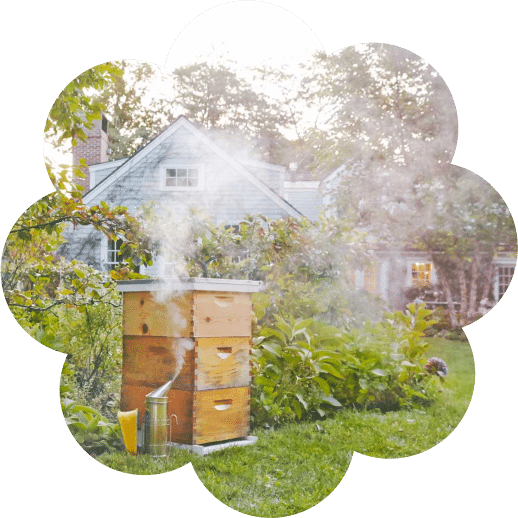
Expert Beekeeping
Hand-crafted, all natural equipment will be installed on your property. Ask us about custom-painted hives!
Colonies of docile honeybees will be introduced into your hive at the start of the season.
We can offer suggestions for pollinator-friendly trees, shrubs, and plants appropriate for your garden.
Our beekeepers will visit your hive for monthly maintenance visits.
You'll receive reports on the health of your hive after each beekeeper visit.
Full-time customer service team will be available to you by phone or email.
Honey Harvesting
When the bees produce surplus honey, we'll harvest, process, bottle, and deliver it for you.
If your bees need all the honey they've produced to get through the winter, we'll share surplus honey with you that we collect from hives at our partner apiaries.
Our residential beekeeping clients receive a Honey Guarantee of 5 pounds of honey per hive each year.
All honey from Best Bees is raw, unfiltered honey, delivered with custom honey labels with your name and the honey harvest date.
Data & Analysis On Your Hive
Our beekeepers will collect hive data upon each visit that will go into our proprietary hive health program 'Bzzz.'
This data is shared with our in-house scientific team who partner with other research institutions to study the data from your hive and our network of hives across the country.
As your hive data is studied and shared with partners, we will update you on scientific learnings and discoveries that are driving pollinator health forward.
For an additional fee, we can analyze the DNA analysis of your honey, reporting back to you on the number of species they've pollinated and the relative importance of each species to your bees.
Beekeeping for Your Commercial Property
We offer innovative solutions that can help bring your corporate sustainability programs to life. These include the highest standards of beekeeping, as well as developed workshops and programs that will engage your community – employees, guests, tenants, community leaders and the public – in your sustainability work.
Expert Beekeeping
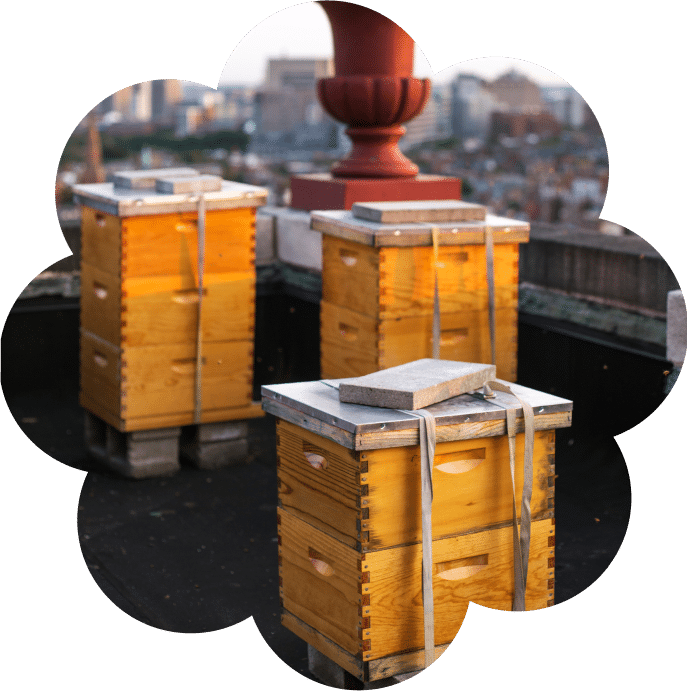
Hand-crafted, all natural equipment will be installed on your property. Ask us about custom-painted hives!
Colonies of docile honeybees will be introduced into your hives at the start of the season.
We can offer suggestions for pollinator-friendly trees, shrubs, and plants appropriate for your garden.
Our beekeepers will visit your hive for monthly maintenance visits.
You'll receive reports on the health of your hive after each beekeeper visit.
Full-time customer service team will be available to you by phone or email.
Honey Harvesting
When the bees produce surplus honey, we'll harvest, process, bottle, and deliver it for you.
If your bees need all the honey they've produced to get through the winter, we'll share surplus honey with you that we collect from hives at our partner apiaries.
Our corporate beekeeping clients receive a Honey Guarantee of 10 pounds of honey per hive each year.
All honey from Best Bees is raw, unfiltered honey, delivered with custom honey labels with your name and the honey harvest date.
Our beekeeping clients have the option to choose their jar size, and add their own company logo to our cobranded honey labels.
Data & Analysis On Your Hive
Our beekeepers will collect hive data upon each visit that will go into our proprietary hive health program 'Bzzz.'
This data is shared with our in-house scientific team who partner with other research institutions to study the data from your hive and our network of hives across the country.
As your hive data is studied and shared with partners, we will update you on scientific learnings and discoveries that are driving pollinator health forward.
For an additional fee, we can analyze the DNA analysis of your honey, reporting back to you on the number of species they've pollinated and the relative importance of each species to your bees.
Products & Programming
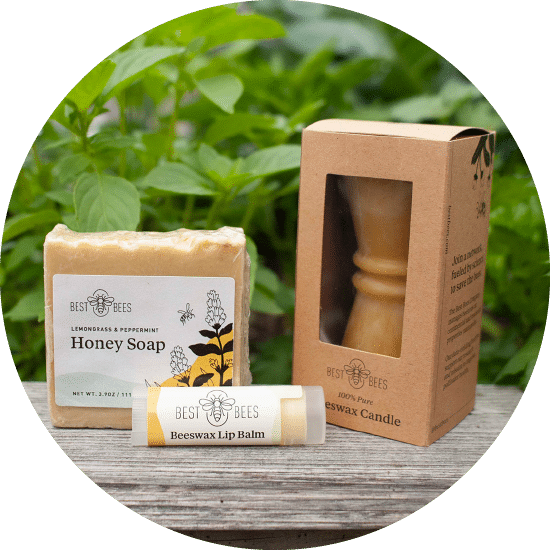
Corporate gifts
We offer many bee products that make great gifts for your tenants, employees, or stakeholders.
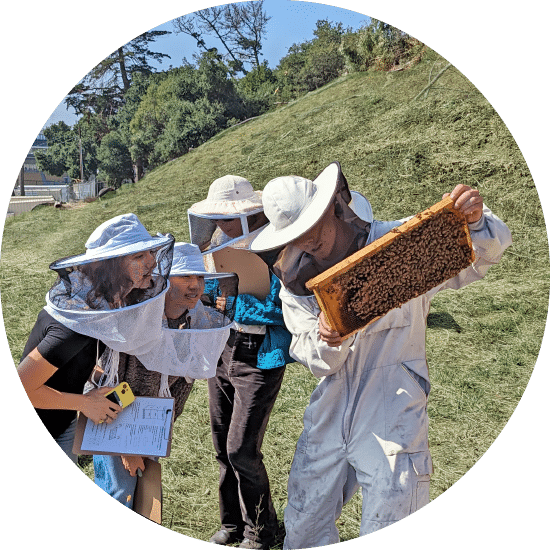
Educational Events
Engage your community with educational and hands-on events run by our beekeepers.

Advanced reporting
With advanced data collection at the hive, we deliver bee health and biodiversity metrics.
How Professional Beekeeping Works

Installation
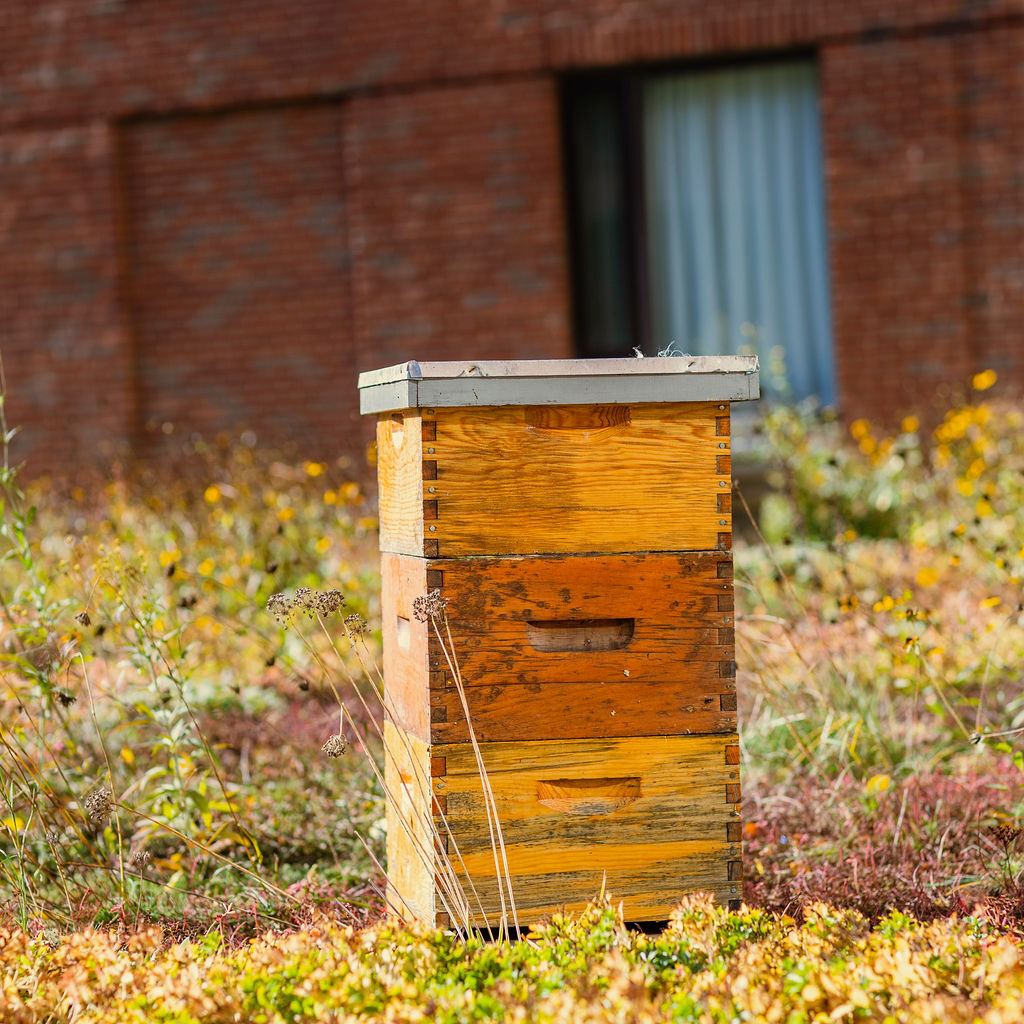
We help you choose an ideal location to establish one or more beehives at your home or workplace.

Maintenance
Our impassioned and experienced beekeepers service your beehives once a month, providing high-quality care and detailed reports.
Harvesting
You keep 100% of the raw honey produced. We'll handle the rest – small batch extraction and bottling with personalized labels.

Research
At every visit, we collect data and share it with our research partners to advance the science of beekeeping and improve the health of pollinators worldwide.
What's Included
What's Included
- Site Evaluation
- Hand-crafted, all-natural beehive equipment installed onsite
- A colony of docile honey bees (Apis mellifera ligustica)
- Monthly maintenance visits and follow up reports
- Advanced scheduling so you can alert your team
- Full-time customer service team available by phone or email
- Raw honey, harvested and bottled just for you
- Replacement colonies provided at no cost
- Fully insured professional service
Your hive at your fingertips.
What the portal delivers

Washington D.C. Service Area
We service hives in the District and throughout the DMV, from White Marsh, MD in the north to Fredericksburg, VA in the south, including the following counties:
Baltimore
Fairfax
Loudoun
Frederick
Arlington
Prince George's
Spotsylvania
Howard



Unique Challenges and Opportunities to Beekeeping in Washington D.C.
Beekeeping Laws in Washington D.C.
Unique Challenges and Opportunities to Beekeeping in Washington D.C.
Urban beekeeping in Washington, D.C. comes with a distinct set of challenges and benefits shaped by the city’s density, climate, and green infrastructure. One of the biggest hurdles is the limited availability of large green spaces, which can make hive placement more difficult compared to suburban or rural areas. While D.C. is known for its iconic monuments and government buildings, its densely packed neighborhoods and commercial corridors can pose spatial constraints for hive siting, especially when factoring in local requirements around setbacks and barriers.
Climate-wise, D.C. experiences hot, humid summers and increasingly erratic seasonal shifts—factors that can stress colonies if not carefully managed. Prolonged heat waves and dry spells in July and August may reduce nectar availability, while mild winters followed by sudden freezes can disrupt brood cycles and increase colony vulnerability. These patterns, which may be exacerbated by climate change, require year-round monitoring and adaptive hive management from our beekeepers.
Despite these challenges, Washington, D.C. remains one of the most promising cities in the country for urban pollinators. The region is home to a surprisingly robust pollinator ecosystem thanks to an abundance of native plants like goldenrod, milkweed, and black-eyed Susan—species that appear frequently in our HoneyDNA analysis of local hives. The city’s commitment to sustainability, including the development of green roofs, rain gardens, and pollinator pathways, supports a diverse range of forage options for honeybees. Residential gardens, community-led urban agriculture projects, and tree-lined streets also contribute to the availability of nectar and pollen throughout the season.
The city's culture of environmental stewardship, paired with active public and private investment in green infrastructure, makes D.C. a unique model for healthy urban beekeeping. With proper siting and strategic support, colonies here are not only able to survive but thrive—and contribute valuable data to ongoing research in pollinator health.
Beekeeping Laws in Washington D.C.
Washington, D.C. is one of the few U.S. cities with clearly defined and actively enforced regulations around urban beekeeping. These guidelines fall under the jurisdiction of the Department of Energy and Environment (DOEE), which oversees the registration, placement, and ongoing management of hives within the District. While supportive of beekeeping as a sustainable practice, the city has implemented specific rules to ensure harmony between beekeepers, bees, and surrounding residents.
Under current regulations, all beekeepers in Washington, D.C. are required to register their colonies with the DOEE on an annual basis. This process helps the city track hive locations, monitor for disease outbreaks, and support public health and safety initiatives. There are also limitations on the number of hives that can be kept per property, based on lot size, as well as rules regarding the distance between hives and neighboring structures or property lines. In some cases, beekeepers can fulfill these spacing requirements by installing flyway barriers or obtaining written consent from neighbors.
Additional requirements include the provision of a consistent water source for the bees and the proactive management of swarming or other nuisance conditions. These rules are in place to protect both pollinators and the community, ensuring that colonies are responsibly managed and do not pose a risk to nearby residents or businesses. Beekeepers importing colonies or equipment into D.C. must comply with existing state and federal health regulations, including documentation confirming the bees are free from communicable diseases or pests.
Best Bees works closely with D.C.’s regulatory framework to ensure that all of our clients’ hives are fully compliant with current laws. Our local beekeepers are trained in safe rooftop access, pesticide licensing, and regional permitting, so clients never need to worry about navigating these requirements alone. While regulations may evolve, our team remains up to date on the latest city and state guidance, allowing us to provide safe, legal, and science-backed beekeeping services throughout the capital.
About Local Honey
Honey production varies from colony to colony, depending on the strength of the queen, the health of the hive, and the availability of nourishment. New colonies tend to produce less honey than established ones. When there is a surplus of honey, we will harvest and jar it for you.
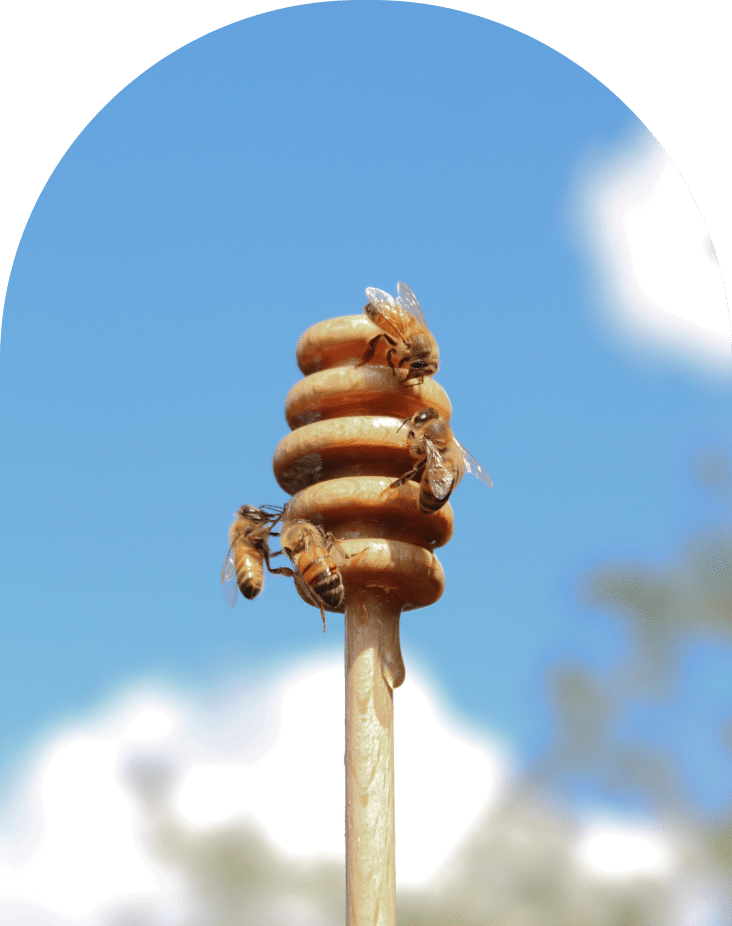
The composition and flavor of honey varies from hive to hive as well, depending on the floral species available to pollinate. This means that honey from your hive will have a unique profile. Tasting it, you are tasting the composite of all the flowers your bees have visited.
In our studies of HoneyDNA, we've found that honey from urban hives includes a much wider range of species – as much as eight times more than honey from rural and suburban hives!
The composition and flavor of honey varies from hive to hive as well, depending on the floral species available to pollinate. This means that honey from your hive will have a unique profile. Tasting it, you are tasting the composite of all the flowers your bees have visited.
In our studies of HoneyDNA, we've found that honey from urban hives includes a much wider range of species – as much as eight times more than honey from rural and suburban hives!
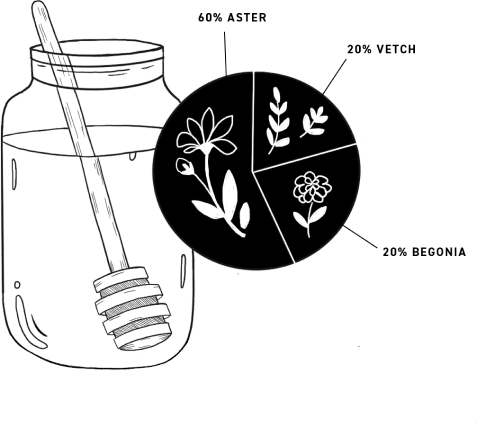
HoneyDNA
We pioneered the process of identifying the exact percentage of various pollen species found in honey through advanced genomic sequencing. Understanding where bees foraged reveals which plants best feed pollinators in the local environment.
Already Have a Hive?
At Best Bees, we’re proud to be a part of the local beekeeping community in every area in which we work. If not already a member of one of the area’s beekeeping associations, we encourage you to join.
Join our Community Scientist movement! Here are some ways you can participate:
- Plant more pollinator habitats on your property
- Use bee-safe pesticide alternatives
- Get involved in local and national lobbying efforts
- Submit your honey for HoneyDNA results
Your HoneyDNA results will be shared with our affiliated non-profit, The Urban Beekeeping Lab, and published on their interactive, global map of all our HoneyDNA samples, contributing to our ongoing biomonitoring research.
We gladly share the learning from our research and our best practices with everyone. To learn more about our scientific team’s past and present work, visit our Research in Action page. Our Webinar and Video Resources page holds all of our webinars, as well as our founder’s TEDx talks. Finally, check out our Blog, where you can find pollinator educational materials, beekeeping best practices, gardening information, and more thought leadership.
Testimonials
Since our founding in 2010, the knowledge and expertise of our beekeeping and customer service teams has helped us build a loyal following among both our commercial and residential customers here in the Washington D.C. area. These are a just a few examples of what they have to say about working with us:
Safe
Our honey bees, Apis mellifera ligustica, are the most docile species of honey bees, making our hives extremely safe and the instance of stings very unlikely.
Insured
We have a full insurance policy and can provide a Certificate of Insurance (COI) easily.
Experienced
Our beekeepers are trained to work safely in densely populated urban areas. This includes on balconies, rooftops, and skyscrapers.